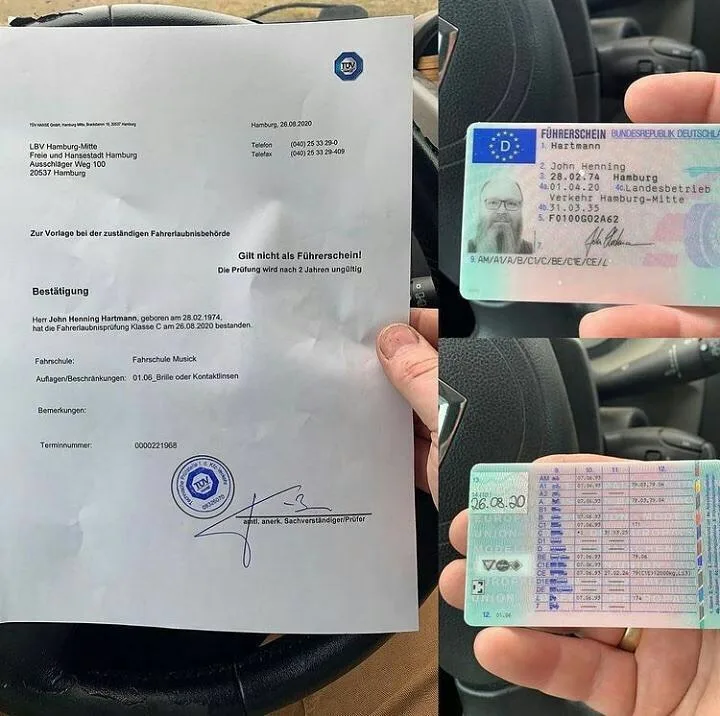
How To Identify The Right Buy German Registered Driving License For You
Navigating the Path to Obtaining a German Registered Driving License
In an increasingly mobile world, having a legitimate driving license is vital for both citizens and expatriates in Germany. For those aiming to drive in the country, getting a German registered driving license can be an uncomplicated procedure, however it requires comprehending its complexities. This blog post uses a comprehensive overview of how to get a German driving license, the considerations included, and responses to regularly asked concerns.
Understanding the German Driving License System
Germany's driving license system is controlled by the European Union (EU) standards, making it among the most strict worldwide. The licenses are issued by local authorities (Führerscheinstelle) based on a standardized procedure that includes theoretical understanding, practical ability tests, and particular health requirements. For non-citizens, the process may differ somewhat depending upon their home nation.
Table 1: Types of German Driving Licenses
License Type
Description
Age Requirement
Credibility Period
Class A
Motorcycle license
24 years
15 years
Class B
Vehicle license (most typical)
18 years
15 years
Class C
Business car license
21 years
5 years
Class D
Bus license
24 years
5 years
Class BE
Towing vehicles
18 years
15 years
Step-by-Step Process to Get a German Driving License
Obtaining a German driving license involves a series of steps, whether you're a citizen or a resident.
1. Identify Eligibility
- Citizens: Generally, you require to be a minimum of 18 years old and a resident of Germany.
- Non-EU Citizens: Check if your existing license can be exchanged for a German one or if you need to start from scratch.
2. Documents Required
Needed Document
Notes
Legitimate Passport or National ID
Should be original and present
Proof of residency (Meldebescheinigung)
Registration from regional authorities
Eye test certificate
Need to be done by an authorized center
Very first aid course certificate
Needed for all applicants
Driving training certificate
Required for newbie candidates only
3. Select Between Practical Tests and Driving School
- Driving Schools: Recommended for those who are not familiar with German traffic rules. The majority of driving schools offer plans that include theory and practical lessons.
- Self-Taught: If you are positive with the German traffic guidelines, you can think about self-study however should pass the tests.
4. Pass the Theoretical Exam
The theoretical exam consists of multiple-choice questions based on traffic guidelines, signs, and precaution. It can be taken in various languages.
5. Total the Practical Driving Test
- Driving Test Overview: Candidates should show their practical driving abilities, including different roadway situations, safe driving maneuvers, and understanding of vehicle handling.
- Test Evaluation Criteria: An examiner will assess the driving ability based on both technical and behavioral elements during the test.
6. Affix Fees and Obtain the License
As soon as you pass both the theoretical and useful tests, you will be needed to pay a fee, which differs by area. After payment, you will receive your driving license.
Table 2: Cost Breakdown for a German Driving License
Cost Type
Typical Cost (EUR)
Registration charges
30 – 50
Theoretical exam cost
25 – 50
Practical exam fee
70 – 150
Driving lessons (per hour)
40 – 70
Emergency treatment course
30 – 60
Eye test
10 – 20
Benefits of Holding a German Driving License
- EU Recognition: A German driving license stands across all EU nations.
- Enhanced Mobility: Easier access to job opportunities, specifically in backwoods where public transport may be limited.
- Resale Value: Often better in a temporal workforce environment.
- International Travel: Utilized as an ID and driving credentials in lots of other nations outside the EU.
Customization for Non-EU Citizens
For non-EU people, the pathway might differ based on bilateral contracts between Germany and the candidate's home country. Some nations have arrangements that enable for a simpler exchange process without the requirement to take tests.
Often Asked Questions (FAQ)
1. Can I drive in Germany with a foreign license?
Yes, if you are a tourist, you can use your foreign license for a limited time (normally approximately 6 months). Nevertheless, living in Germany for longer durations usually needs you to exchange your license.
2. The length of time does it take to get a German driving license?
The timeframe can range from a few weeks to a number of months depending upon how rapidly you prepare, complete the theory and useful lessons, and schedule your tests.
3. What if I fail the driving test?
You can retake the driving test; nevertheless, extra costs will use. Echten Führerschein Kaufen Erfahrungen is a good idea to practice more before making a second effort.
4. How much does the whole procedure expense?
The overall cost can vary from EUR1,500 to over EUR2,000, depending upon elements such as the number of driving lessons required and the various charges connected with the tests and courses.
Getting a German registered driving license involves a number of steps however is manageable with the right preparation and understanding of the requirements. Whether one is a resident or a foreign national, understanding the procedures and expenses involved can assist make the journey smoother. Embracing the challenges of discovering to navigate Germany's roads can lead to newfound freedom and chances for all chauffeurs.